
Brabham BT46B: The Fan Car Formula 1 Argued Out of Existence
 Play the film, 9:13
Most people who know about the fan car know one thing about it: it was banned after a single race. It's a clean story, and it's wrong in the way that matters. The Brabham BT46B passed scrutineering, survived its protests, won the 1978 Swedish Grand Prix and kept the win. It still has it. The rulebook said yes at every stage. The car disappeared anyway, and how that happened says more about Formula 1 than the fan does.
The one engine that couldn't copy Lotus
By the spring of 1978, Colin Chapman had moved the argument underneath the car. The Lotus 79 shaped its floor like an upside-down wing and sealed the sides to the track with sliding skirts, so the air rushing beneath it pulled the whole machine down. It won on its debut at Zolder and again at Jarama, and Mario Andretti looked as though he was out for a drive.11 The Lotus 79 went on to win Andretti the 1978 title.
Every other designer had the same assignment: copy the tunnels. Gordon Murray at Brabham couldn't. His car used Alfa Romeo's flat-12, and a flat engine is a wide engine. It sat in exactly the space the tunnels needed.
Murray had a second problem, which the video didn't have time for. The original BT46 was meant to cool itself through flush panels on the bodywork instead of conventional radiators. The idea failed. The engineer David Cox worked out that the panels offered only about 30 per cent of the cooling area the car needed, and radiators had to be bolted to the nose.22 The surface-cooling story is covered in the BT46 technical history. So Brabham went into 1978 with an engine too wide for ground effect and a car that had already lost one argument with its own heat.
A precedent from America
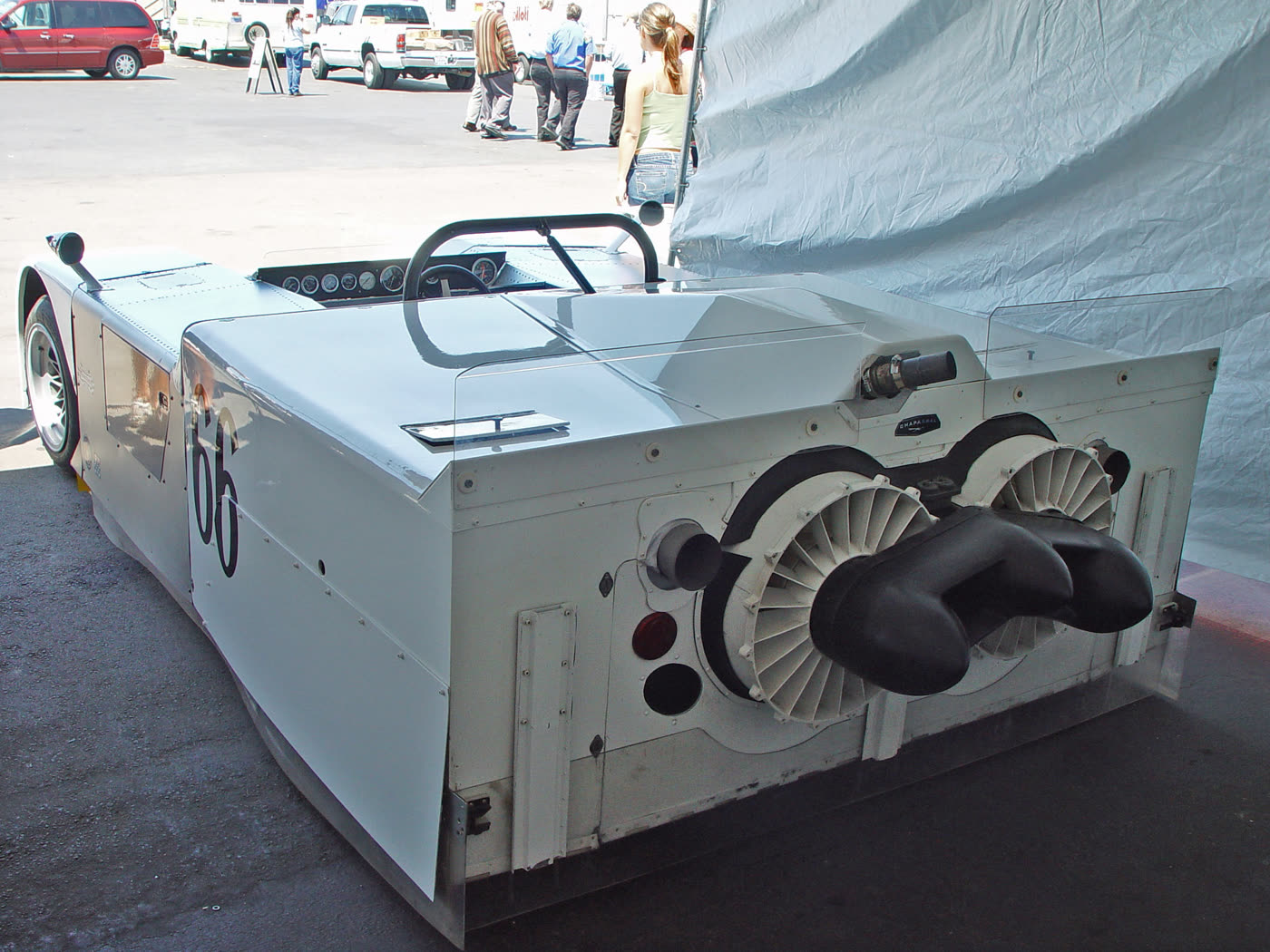
Murray's way out already existed. In 1970, the Chaparral 2J had raced in Can-Am with two fans at the back, driven by their own small two-stroke engine, drawing the air out from under a skirted body. It was faster than everything around it. It was also unreliable, and then it was banned.33 More on the Chaparral 2J, the car Murray was following.
Formula 1's rules prohibited movable aerodynamic devices, and a spinning fan is hard to describe as anything else. But the wording turned on a device's primary purpose. If the fan's primary purpose was something other than aerodynamics, it was legal.
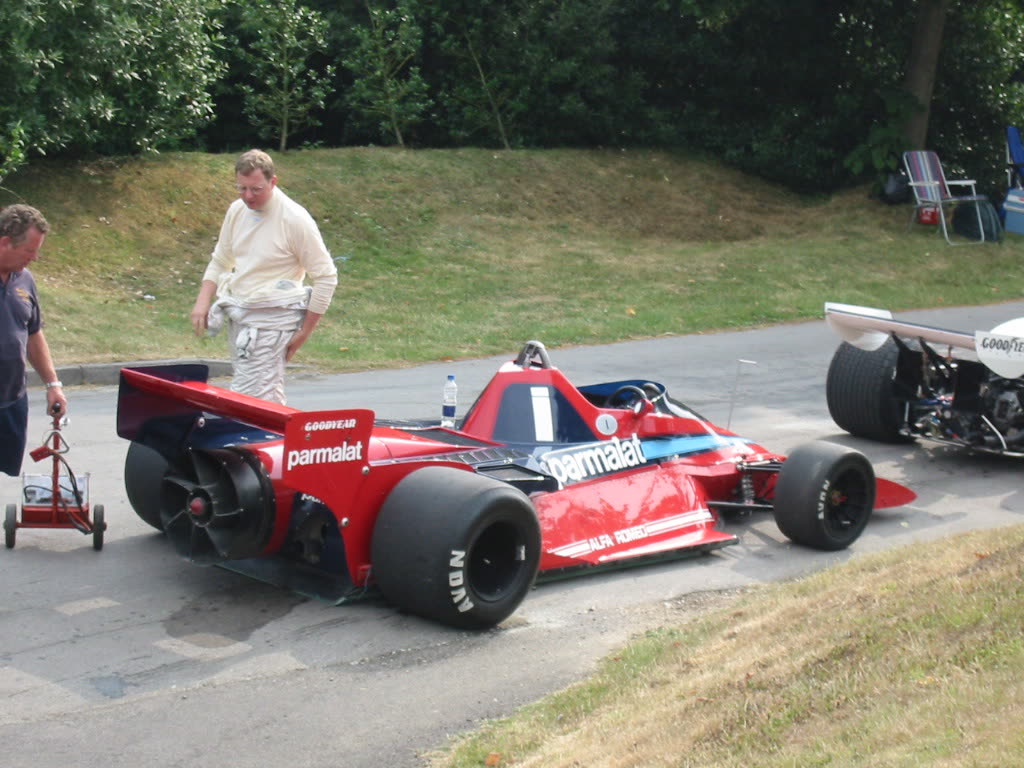
Brabham's answer was cooling. The fan drew air through a radiator laid flat over the engine, and the team had run a small cooling fan on the previous year's car, so there was even a history to point to. It also drew air out from under a car sealed to the ground. Both things came from the same blades, and that was the cleverness of it. Murray didn't hide the effect. He made the legal purpose and the unfair advantage impossible to separate.
Anderstorp
The car arrived at the Swedish Grand Prix in June. Rivals protested almost at once, and the scrutineers passed it. Then the car gave itself away. When a mechanic blipped the throttle in the pit lane, the fan spun up, the suction grew, and the whole car squatted towards the ground while standing still.
Andretti called it "a bloody great vacuum cleaner" and said it would throw stones and dirt at anyone following. Murray's reply was an engineer's reply: the air left the fan at about 55 mph, slower than the cars themselves, and the design threw debris out sideways rather than backwards.44 Both positions are set out in the BT46 history. Andretti's complaint and Murray's physics have never been settled by any test. The argument never quite went away, and it never quite stood up either.
Brabham knew what it had, so it hid it. Both cars qualified on heavy fuel. Andretti took pole by seven tenths, with John Watson second and Niki Lauda third.55 Full classification on the 1978 Swedish Grand Prix page and in the grandprix.com report.
The race was 70 laps. Watson went off on lap 19. Then oil went down on the circuit, and the afternoon turned against every car that depended on the surface for grip.66 Sources differ on whose car dropped the oil. Some name Didier Pironi's Tyrrell, others Jean-Pierre Jabouille's Renault. The fan car made its own. Lauda sat behind the leading Lotus until lap 39, when Andretti slid wide on the oil at the last corner and Lauda went through on the inside. Andretti's engine broke soon after.
Lauda won by 34.6 seconds from Riccardo Patrese's Arrows, with Ronnie Peterson's Lotus third. By his own account he was still holding back.
The part that gets told wrong
The fan car was banned after one race.
The protests failed and the win stands. The car was withdrawn under political pressure, and fan cars were outlawed only for the future.
The legal route had been tried and had failed, so the other teams used the political one. Chapman led the revolt, and the pressure landed on Bernie Ecclestone. He owned Brabham. He had also just become president of FOCA, the constructors' association, and the men demanding he get rid of his car were the men who gave him his power.
He could keep the fastest car in Formula 1 or he could keep his position. A deal was made: run it for three more races, then retire it. The governing body, the CSI, closed the door before that could happen.77 The exact order of Ecclestone's deal and the CSI's ruling varies between accounts. The defensible version is that the deal was made and the governing body shut the door before it mattered. At the French Grand Prix two weeks later, the Brabhams ran without fans.
Look at what wasn't taken. There was no disqualification and no asterisk. The BT46B left the sport with a perfect record, and the best car of its season was beaten by a committee rather than another car.
What survived
Murray had already drawn the successor, the BT47, with twin variable-geometry fans in the Chaparral manner. It was never built. For 1979, Alfa Romeo produced a narrower V12 so Brabham could join the ground-effect fight on the same terms as everyone else.
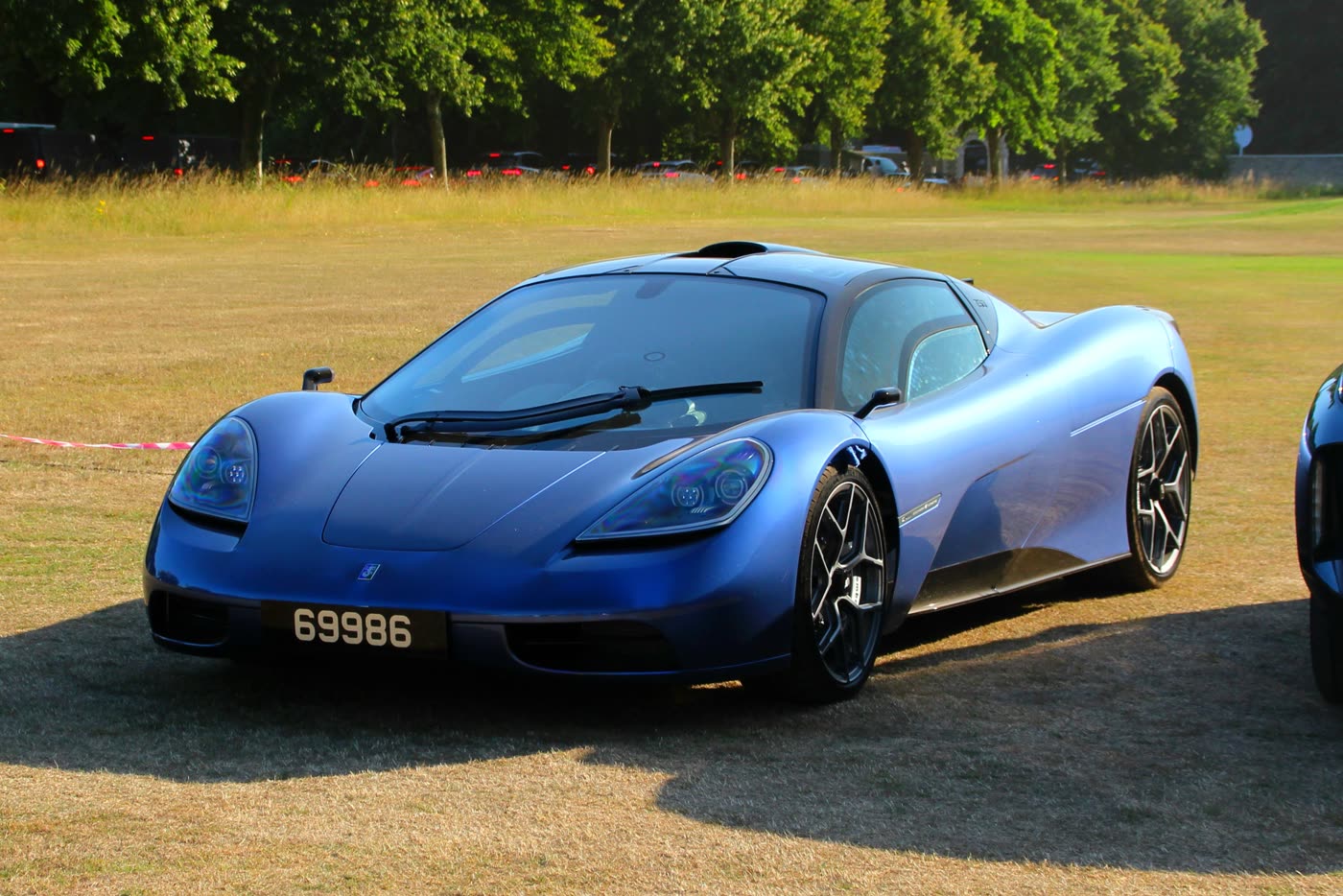
Then, 42 years later, Murray built his own road car. The Gordon Murray Automotive T.50 has a 400 mm fan at the back.88 The T.50 was revealed in 2020. There was no paddock to answer to this time.
Formula 1 never disproved the idea. It withdrew the permission. Between the two fans, Murray moved to McLaren, where another low, argued-over car won fifteen races out of sixteen.
Read further
- Motor Sport's race report from July 1978, written at the time
- Motor Sport's database entry for the race
- Brabham BT46 on Wikipedia, for the technical history and the withdrawal